Making Collaboration Count
SXSW EDU 2024
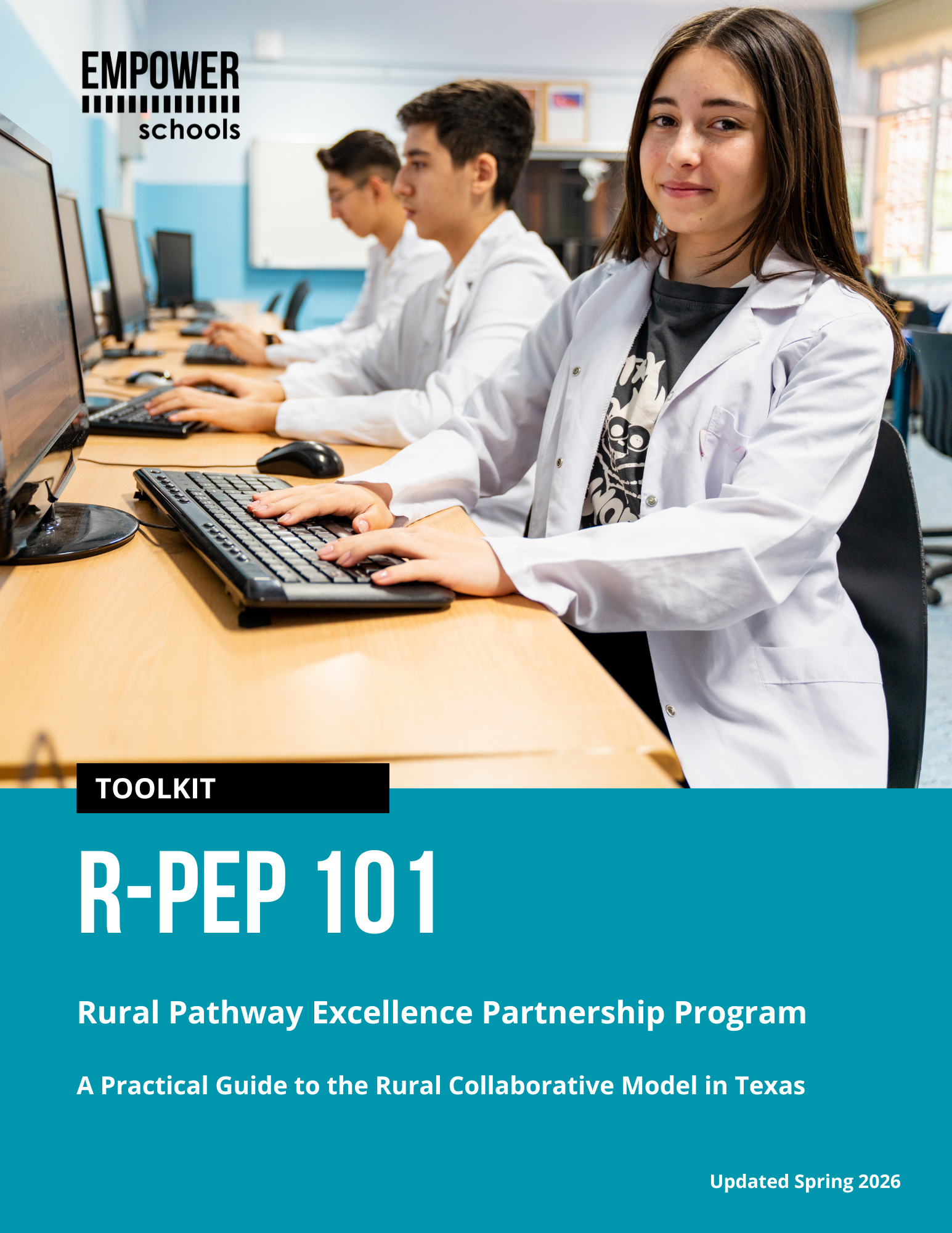
One in five public school students in the United States attends a rural school, yet rural districts often have fewer resources, smaller student populations, and less access to college and career pathways than their urban and suburban peers.
Hannah Foley of Empower Schools created this SXSW EDU panel to support Empower’s partners across the country and share how formalized Rural Collaboratives can help communities overcome those barriers. Leaders from Texas, Colorado, and Indiana explain how school districts, higher education institutions, employers, and coordinating organizations can share resources and expand opportunities while preserving local schools and community identity.
The conversation is moderated by Dr. Cheryl Lambert, Associate Professor at Austin Peay State University and Coordinator of the Center for Rural Education. Panelists include Michael Gonzalez, Executive Director of the Rural Schools Innovation Zone; Karen Cheser, Superintendent of Durango School District and Board Chair of the Southwest Colorado Education Collaborative; and Chad Bolser, Chancellor of Ivy Tech Community College’s Richmond campus and a higher education partner to RAZ-32.
Video highlights:
00:05: Dr. Cheryl Lambert explains the inequities facing rural students and how formalized partnerships can expand access to postsecondary education and career opportunities
02:18: The panelists introduce three Rural Collaborative models serving communities in South Texas, Southwest Colorado, and East Central Indiana
10:45: Leaders explain how their collaboratives moved from idea to action through cross-sector planning, grant funding, shared community needs, and the willingness of districts to work across boundaries
19:30: The panel examines the roles of superintendents, coordinating intermediaries, higher education institutions, employers, and dedicated executive directors in sustaining regional collaboration
28:47: Panelists share results, including expanded career pathways, increased student participation, stronger employer coordination, higher attendance during work-based learning, and significant growth in dual credit completion and industry certifications
40:06: Leaders compare how state policy supports or complicates Rural Collaboratives in Colorado, Texas, and Indiana, including Texas funding incentives for shared rural career pathways
45:05: Michael Gonzalez explains why scaling requires more than funding, including a trusted local champion, community involvement, and a commitment to expanding opportunity without forcing school consolidation
48:28: The panel discusses how community colleges and four-year institutions can connect high school pathways to credentials, degrees, and continued support after graduation
52:41: Leaders address practical challenges such as long travel distances, transportation costs, master scheduling, instructor shortages, shared staffing, and using connected buses to make travel time productive
55:19: The panel closes with lessons for other communities, including leading with economic development, consistently communicating the purpose of the work, planning for long-term sustainability, and hiring a dedicated leader who can manage funding, relationships, and startup operations
Best for: Rural superintendents, district and regional leaders, higher education and workforce partners, state policymakers, funders, and organizations building cross-district college and career pathways